
France Electronic Invoicing: 2026 and 2027 Requirements
France’s electronic invoicing reform has already started. If you run a business in France—or manage one from abroad—the first deadline is behind us and another is approaching.

Many business owners still think emailing a PDF invoice is enough. Under the new framework, a simple emailed PDF is not a compliant electronic invoice. The change concerns how invoices are created, transmitted, received and reported.
What changed on 1 September 2026?
From 1 September 2026, businesses within the French VAT framework, including those not actually charging VAT, must be capable of receiving electronic invoices through an approved platform when their suppliers issue them under the reform. Large enterprises and mid-sized enterprises also became subject to electronic invoice issuance and relevant e-reporting duties.
Next milestone: 1 September 2027. SMEs and microenterprises become subject to the relevant requirements for issuing electronic invoices and transmitting transaction and payment data. Receiving and issuing are two different obligations; do not confuse the deadlines.
The costly misconception: “We already send PDFs”
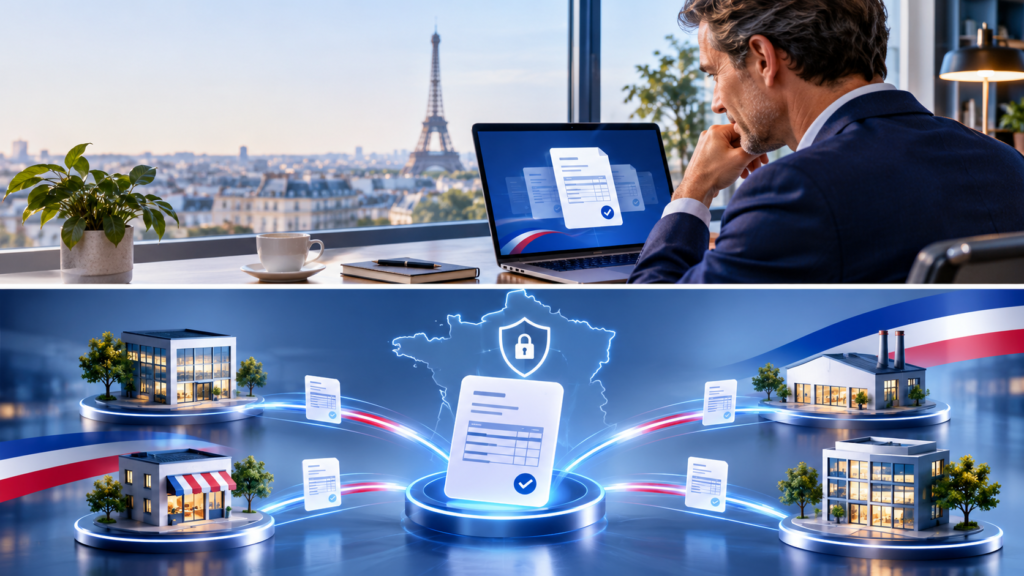
A normal PDF attached to an email does not, by itself, meet the requirements of the new French e-invoicing framework. The reform uses structured invoice formats and approved platforms. Check whether your invoicing software supports the required workflow, whether your chosen platform is registered, and how your business will receive supplier invoices.
Five questions to ask your finance team today
- Which approved platform receives our supplier invoices?
- Can our current invoicing software send compliant electronic invoices when required?
- Does our company need to start issuing in 2026 or 2027?
- Which of our cross-border transactions require e-reporting instead of domestic e-invoicing?
- Who coordinates our accountant, software vendor and internal finance team?
Why international businesses face a bigger challenge
A French company may have a foreign shareholder, an overseas finance director, a French accountant and invoices issued from multiple countries. The practical challenge is often not one complex rule: it is making sure everyone knows who handles which step.
A French accountant can advise on accounting and tax treatment. A software vendor manages technical implementation. Yet an international business may still need one English-speaking contact to organise documents, clarify the timeline and coordinate the specialists.
Dokanfi: one point of contact for your French business
Dokanfi — Your French Partner helps entrepreneurs, foreign-owned companies, expatriates and business owners navigate French financial and administrative processes. Services can include administrative coordination, company setup support, preparation of financial information, outsourced CFO assistance, and liaison with appropriately authorised accounting, tax and legal professionals.
For the invoicing transition, we can help you structure an initial readiness check, identify open questions, organise your paperwork and coordinate implementation discussions with the relevant service providers.
Is your French business ready?
Book a 40-minute introductory consultation for €90, available online in English or French. We will discuss your business, its administrative priorities and the next practical steps. Contact Dokanfi to request your consultation.
Official French guidance
General information only; not legal, tax or accounting advice. The exact rules depend on the entity, transaction and circumstances. Any regulated service is performed by appropriately authorised professionals.
Who must issue and receive in 2026 and 2027?
From 1 September 2026, French-established VAT-taxable businesses within the reform must be able to receive electronic invoices. Large companies and intermediate-sized enterprises must issue qualifying invoices from that date; SMEs and micro-businesses start mandatory issuance on 1 September 2027. Consumer sales and certain cross-border transactions fall under e-reporting depending on their nature. A PDF emailed directly to a customer is not sufficient to meet the structured e-invoicing requirement.